
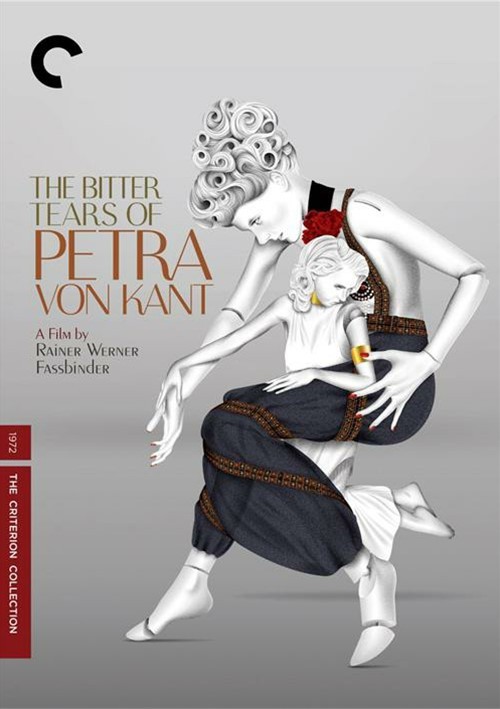
The Bitter Tears of Petra von Kant
Shipping Class 2 = 69 SEK
Shipping Class 3 = 89 SEK EUROPE SHIPPING #1 Shipping Class 1 = 100 SEK
Shipping Class 2 = 150 SEK
Shipping Class 3 = 200 SEK EUROPE SHIPPING #2 Shipping Class 1 = 150 SEK
Shipping Class 2 = 200 SEK
Shipping Class 3 = 250 SEK EUROPE SHIPPING #3 Shipping Class 1 = 150 SEK
Shipping Class 2 = 250 SEK
Shipping Class 3 = 350 SEK OUTSIDE EUROPE SHIPPING Shipping Class 1 = 150 SEK
Shipping Class 2 = 250 SEK
Shipping Class 3 = 350 SEK
NOTE: You can buy as many items you want within the same shipping class. Read more » ×
NOTE: This is a region-1 DVD which requires a region free DVD-player.
In the early 1970s, Rainer Werner Fassbinder discovered the American melodramas of Douglas Sirk and was inspired by them to begin working in a new, more intensely emotional register. One of the first and best-loved films of this period in his career is The Bitter Tears of Petra von Kant, which balances a realistic depiction of tormented romance with staging that remains true to the director’s roots in experimental theater. This unforgettable, unforgiving dissection of the imbalanced relationship between a haughty fashion designer (Margit Carstensen) and a beautiful but icy ingenue (Hanna Schygulla)—based, in a sly gender reversal, on the writer-director’s own desperate obsession with a young actor—is a true Fassbinder affair, featuring exquisitely claustrophobic cinematography by Michael Ballhaus and full-throttle performances by an all-female cast.
Special features:
– New 4K digital restoration, supervised by director of photography Michael Ballhaus, with uncompressed monaural soundtrack on the Blu-ray
– New interviews with Ballhaus and actors Margit Carstensen, Eva Mattes, Katrin Schaake, and Hanna SchygullaNew interview with film scholar Jane Shattuc
– Role Play: Women on Fassbinder, a 1992 German television documentary by Thomas Honickel featuring interviews with Carstensen, Schygulla, and actors Irm Hermann and Rosel Zech
– New English subtitle translation
– PLUS: An essay by critic Peter Matthews


Top 10 Film - March 2020
-
 And Then We Danced Film 179 SEK
 -
 Den vidrige Herr Honka Film 179 SEK
 -
 Apocalypse Now – Final Cut (Blu-Ray) Film 229 SEK
 -
 Fail Safe (Blu-Ray) Film 349 SEK
 -
 Miraï, min lillasyster Film 179 SEK
 -
 Den stora deckarboxen Vol. 2 Film 549 SEK
 -
 Downton Abbey – The Movie Film 179 SEK
 -
 Joker Film 179 SEK
 -
 Amazing Grace Film 199 SEK
 -
 Chernobyl Film 299 SEK